Spain
The Glass RoomSpain is a temporary refuge and a landscape of separation for the Landauer family in exile. Their passage through it carries them beyond the German-controlled French coast, but the border crossing leaves Katalin and Marika behind; in Spain, the family’s safety remains shadowed by uncertainty, distance, and the lost home in Město.
Passage into Exile
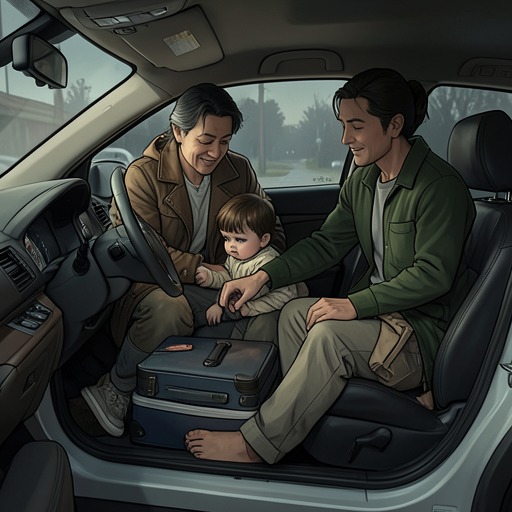
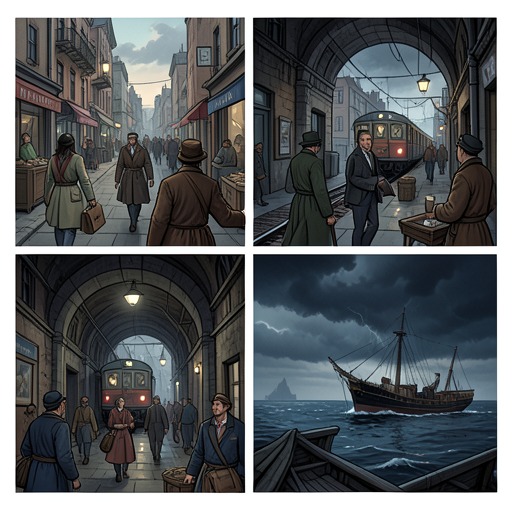
The family travels in a crowded train compartment with six bunks folded down and their cases on the floor. Elsewhere, passengers argue over the scant sleeping space, and there is no restaurant car. Their papers—tickets, passports, French transit visas, and entry visas for Spain—make the journey possible, but do not restore the ordinary comforts that war has taken away. Viktor’s dry observation that this is not what they are used to gives way to the larger truth: neither war nor exile belongs to their former life.
At the border, documents become a test with immediate consequences. The German military police examine the family’s papers and tickets; when Katalin’s documents are scrutinized, officials take her by the elbow and lead her away. Marika calls for her mother. Liesel pulls the girl close and reassures the officials that Marika is with the family and will be looked after. The family’s passage onward is therefore also a forced separation: the papers that permit some to travel do not secure passage for everyone.
Arrival and Uncertain Safety
Once the train is in Spain, the blackout no longer constrains the night journey. Light from neighboring compartments falls across the embankment, briefly bringing rough grass and sere trees into view. The changed conditions mark a passage out of occupied France, but not a return to security or home. In the darkness, Liesel realizes that Viktor is weeping; she urges him to pull himself together and think about what they might do when they reach Bilbao. His distress and her practical insistence show how exile presses even intimate family life into the work of continuing onward.
The country’s ocean air offers Liesel a new sensory boundary. Earlier, the ocean had been foreign and imagined; now its scent reaches her through the train window, and its sound becomes a constant in the family’s life. In the villa where they stay, the room’s white walls, French window, veranda, cane chairs, and mosquito net frame a temporary existence far from Město. Liesel dreams of Katalin and Hana, but the joy of those dreams disappears with the morning. Spain provides shelter, not restoration.
Separation Without Resolution
Viktor spends much of his time in the city, visiting offices and consulates and pressing people to send letters and telegrams. He is trying to find Katalin and her daughter, last seen at Bayonne in the German-occupied coastal zone. They might be in Spain, still in France, or somewhere else; he cannot establish where they are. His repeated efforts do not resolve their disappearance, and he returns each evening with the hopeless look of a refugee. Liesel, meanwhile, comforts the children with lies, concealing from them how little the adults know.
Spain thus occupies an unresolved place in the family’s story: it is the territory they reach, the setting for a fragile interval of refuge, and the point from which they search for those left behind. The ocean, once alien to Liesel’s imagination, becomes the dominant sound of this displaced life, while the lost home and the absent women remain present through memory, dreams, and unanswered inquiries.